
Introduction
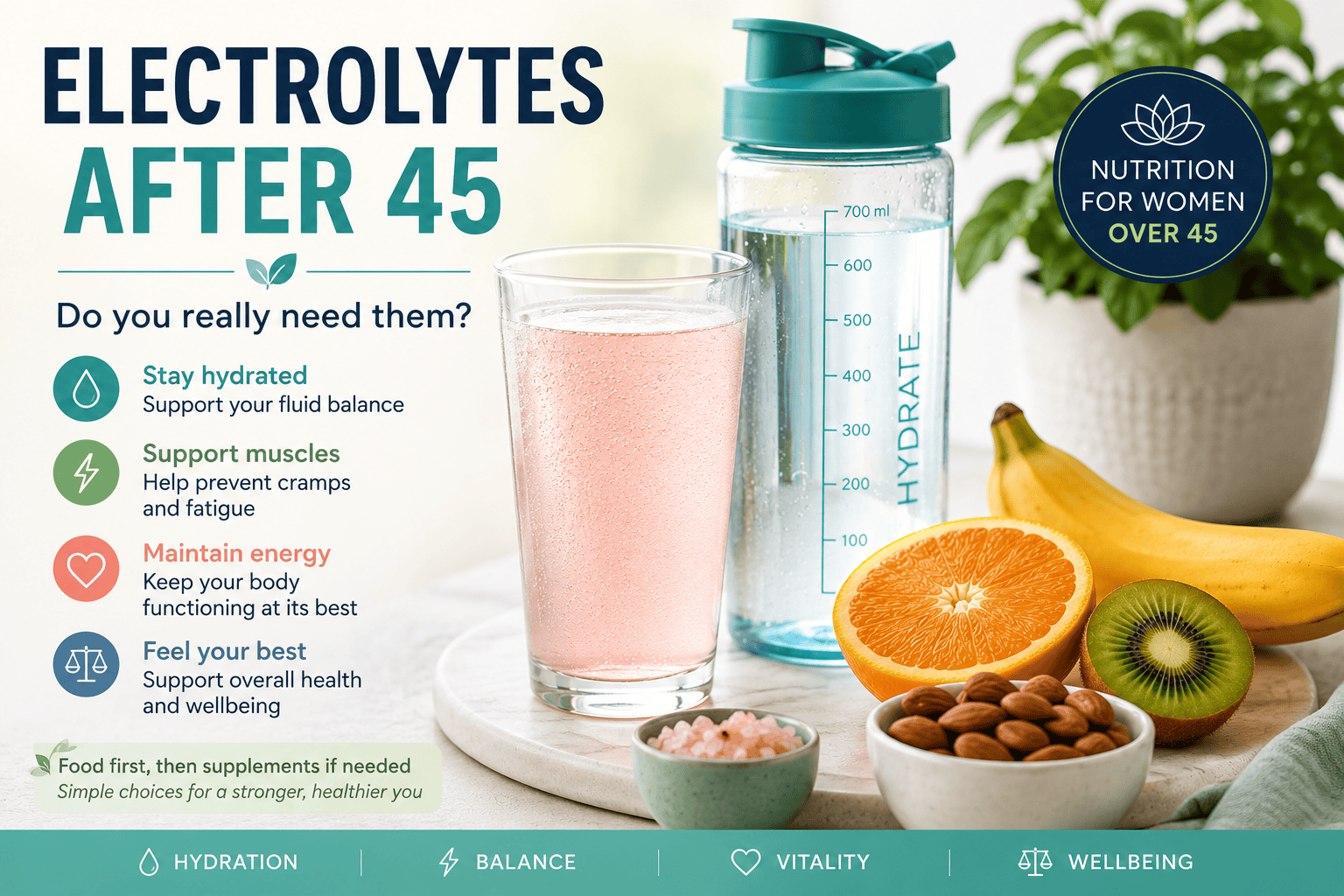
Electrolytes after 45 have become increasingly popular, with sports drinks and supplements claiming to improve hydration, boost energy and prevent muscle cramps. But are they really necessary, especially as we get older?
For most healthy adults, the answer is not usually. If you eat a balanced diet and stay well hydrated, your body will normally get all the electrolytes it needs from food. However, there are situations where electrolyte drinks or supplements can be beneficial.
What Are Electrolytes?
Electrolytes are minerals that carry an electrical charge when dissolved in body fluids. They help regulate hydration, muscle contractions, nerve signalling and heart function.
The main electrolytes include:
Sodium – regulates fluid balance and supports muscles and nerves.
Potassium – essential for healthy muscles and heart rhythm.
Magnesium – supports muscle relaxation, energy production and nerve function.
Calcium – important for strong bones, muscles and nerves.
Chloride and phosphate – help maintain fluid balance and support metabolism.
Why Electrolytes Matter
As we age, maintaining good hydration becomes increasingly important.
Older adults may be more susceptible to dehydration because:
Thirst sensation often decreases with age.
Certain medications can affect fluid balance.
Illnesses causing vomiting or diarrhoea can lead to rapid electrolyte loss.
Recovery from exercise may take longer.
Although these changes make hydration more important, they do not necessarily mean everyone over 45 needs an electrolyte supplement.
When Electrolyte Drinks Can Be Helpful
Electrolytes may be beneficial if you:
Exercise for more than 60–90 minutes
During prolonged exercise or endurance events, electrolytes lost through sweat may need replacing.
Sweat Heavily
Working outdoors or exercising in hot weather increases fluid and mineral losses.
Have Vomiting or Diarrhoea
Replacing lost electrolytes can help restore hydration more effectively than plain water alone.
Follow a Very Low-Carbohydrate Diet
Low-carbohydrate or ketogenic diets can increase water and sodium loss, sometimes causing headaches, dizziness or fatigue.
Have a Medical Condition
Certain medical conditions or medications may affect electrolyte balance. Always seek professional advice if this applies to you.
When Electrolytes Are Usually Unnecessary
Most people do not need electrolyte drinks every day.
If you:
Eat a balanced diet
Drink enough water
Exercise moderately
Do not lose excessive fluids
then food and water are usually sufficient.
Many sports drinks also contain significant amounts of sugar and unnecessary calories.
Natural Food Sources of Electrolytes – i would prefer my table instead
Before reaching for a supplement, consider whether your diet already provides what you need.
| Electrolyte | What it does | Natural food sources | When a supplement/drink may help |
| Sodium | Fluid balance, nerve signals, muscle contraction | Table salt, cheese, bread, soups, olives | Heavy sweating, endurance sports, vomiting, diarrhea |
| Potassium | Heart rhythm, muscle and nerve function | Bananas, potatoes, sweet potatoes, beans, spinach, avocados | Significant fluid loss or medically diagnosed deficiency |
| Magnesium | Muscle relaxation, energy production, nerve function | Nuts, seeds, dark leafy greens, whole grains, legumes | Frequent muscle cramps, low dietary intake, certain medical conditions |
| Calcium | Bones, muscle contraction, nerve function | Milk, yogurt, cheese, fortified plant milks, tofu | Low dietary intake or specific medical needs |
| Chloride | Fluid balance, digestion | Table salt, seaweed, tomatoes, lettuce | Usually replaced automatically when sodium is replaced |
A varied diet usually provides adequate amounts for healthy adults.
Are Electrolyte Drinks Worth Buying?
Usually worth considering if you:
Exercise hard for more than an hour
Sweat heavily
Are recovering from illness
Work in hot conditions
Usually unnecessary if you:
Exercise for less than an hour
Are mostly sedentary
Already eat a balanced diet
Choosing an Electrolyte Drink
If you decide to use one, choose a product that:
Is low in added sugar
Doesn’t contain excessive sodium
Provides sensible rather than mega-dose amounts
Remember that more isn’t always better.
A Simple Rule of Thumb
✅ Everyday life: Water is usually enough.
✅ Long exercise sessions: Water plus electrolytes may help.
✅ Illness with fluid loss: Electrolytes are often more effective than water alone.
✅ Persistent cramps, dizziness or fatigue: Speak to a healthcare professional rather than relying on supplements.
The Bottom Line
Electrolytes play an essential role in hydration, muscle function and overall health. However, for most adults a balanced diet and adequate water intake provide everything the body needs.
Electrolyte drinks and supplements are most useful during prolonged exercise, heavy sweating or illness causing fluid loss. For everyday health, whole foods and good hydration remain the best approach.
Frequently Asked Questions
Do adults over 45 need electrolyte drinks every day?
No. Most people get enough electrolytes from food and water.
Are electrolytes better than water?
Not usually. Water is sufficient for everyday hydration, while electrolytes are more helpful after heavy sweating or illness.
Can electrolytes help prevent muscle cramps?
They may help if cramps are caused by dehydration or electrolyte loss, but many cramps have other causes.
Are sports drinks healthy?
Some can be useful during prolonged exercise, but many contain high amounts of sugar and calories.