
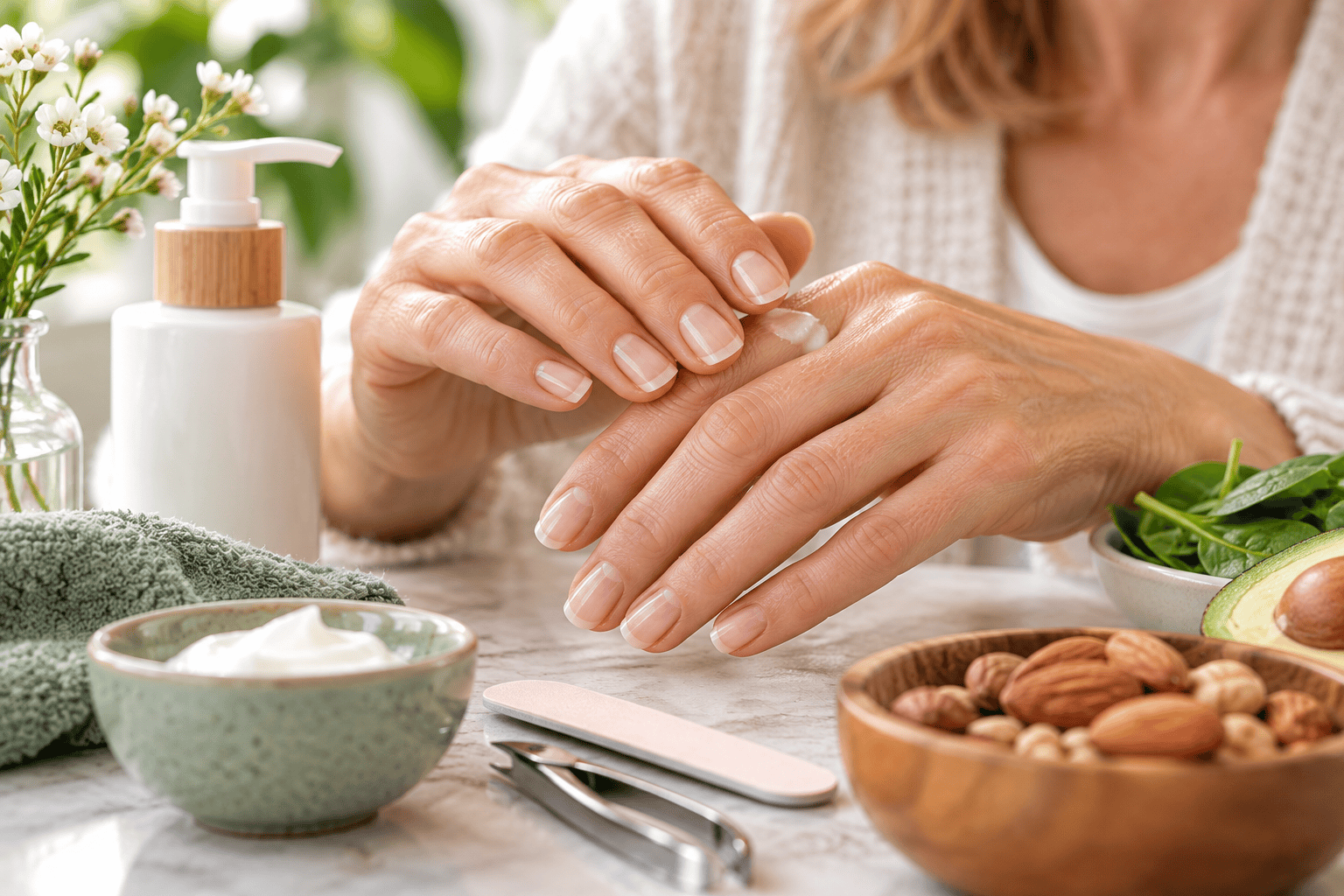
Brittle, splitting or peeling nails can become more common after 45. Nails naturally change as we get older: they may grow more slowly, become drier and take longer to recover from everyday damage.Most brittle nails are not a sign of anything serious. However, persistent or sudden changes can sometimes be linked to nutritional deficiencies, skin conditions, thyroid problems or fungal infections.
So why do nails become brittle with age, and what can you do to keep them stronger?
Why Do Nails Become Brittle as We Age?
Several factors can contribute to weaker nails as we get older.
Nails Become Drier
With age, nails can lose some of their natural moisture and oils. This makes them less flexible and more likely to crack, peel or split.
Frequent hand washing and repeated exposure to water can make the problem worse.
Nail Growth Slows Down
Nails tend to grow more slowly as we age.
This means everyday damage takes longer to grow out, so nails may appear weaker or more uneven than they did when we were younger.
Years of Wear and Tear Add Up
Our hands are exposed to a lot over a lifetime.
Repeated contact with:
- Water
- Washing-up liquid
- Household cleaning products
- Nail polish remover
- Other chemicals
can gradually weaken the nail surface.
The repeated cycle of getting nails wet and then allowing them to dry can also contribute to brittleness.
Changes in Circulation May Play a Part
Changes in circulation as we age may affect how quickly nails grow and repair themselves.
This is another reason nail growth and appearance can gradually change over time.
Can Brittle Nails Be a Sign of a Health Problem?
Sometimes.
Brittle nails may occasionally be associated with conditions such as:
- Iron deficiency
- Thyroid disorders
- Psoriasis
- Eczema
- Fungal nail infections
Certain medications can also affect nail strength.
This doesn’t mean that brittle nails automatically indicate a medical problem. Age-related nail changes are very common, but significant or unexplained changes are worth discussing with a healthcare professional.
Can Diet Help Strengthen Brittle Nails?
Good nutrition supports normal nail growth.
Aim for a balanced diet containing adequate:
- Protein
- Iron
- Zinc
- Vitamins and minerals
Protein is particularly important because nails are largely made from a protein called keratin.
Rather than relying immediately on supplements, concentrate first on eating a varied and balanced diet.
If you are deficient in a particular nutrient, correcting that deficiency may help. However, supplements are unlikely to transform your nails if your nutritional intake is already adequate.
What About Biotin for Brittle Nails?
Biotin is frequently promoted in supplements for stronger hair and nails.
Some research suggests it may help certain people with brittle nails, but the evidence is mixed.
It therefore makes sense to be cautious about claims made for high-dose “hair, skin and nails” supplements. If you are considering taking biotin regularly, speak to a healthcare professional, particularly if you take medication or are having medical tests.
How Can You Protect Brittle Nails?
Simple everyday measures can often make a noticeable difference.
Moisturise Your Nails and Hands
Use hand cream regularly, particularly after washing your hands.
Products containing ingredients such as glycerin, urea or petrolatum can help reduce dryness.
Don’t forget to massage moisturiser into the nails and cuticles as well as the skin.
Wear Gloves for Household Jobs
Wear protective gloves when:
- Washing dishes
- Cleaning
- Gardening
- Using household chemicals
Reducing repeated exposure to water and cleaning products can help protect the nails.
Keep Nails Neatly Trimmed
Keeping nails reasonably short can reduce the chance of them catching, tearing or splitting.
File rough edges gently rather than allowing cracks to spread further down the nail.
Limit Harsh Nail Products
Frequent use of acetone-based nail polish remover can dry the nails.
If your nails are already brittle, consider reducing how often you use polish removers and other harsh nail products.
When Should You See a Doctor About Brittle Nails?
Consider seeking medical advice if:
- Your nails suddenly become brittle when they were previously healthy
- One nail changes significantly while the others remain normal
- Nails become very discoloured
- They become unusually thick
- They are painful
- A nail starts lifting away from the nail bed
It is also worth seeking advice if nail changes occur alongside symptoms such as:
- Unexplained fatigue
- Hair loss
- Weight changes
- Feeling unusually cold
These symptoms may sometimes indicate an underlying issue such as iron deficiency or a thyroid condition.
Brittle Nails and Healthy Ageing
Changes to our skin, hair and nails are a normal part of ageing, but looking after them is still part of looking after our overall health.
Good nutrition, adequate protein, sensible skin and nail care and attention to unexplained changes can all help.
Rather than expecting a supplement to provide a quick solution, start with the basics: protect your hands, moisturise regularly and eat a varied diet.
The Bottom Line
Brittle nails become more common with age because nails tend to become drier, grow more slowly and accumulate years of everyday wear and tear.
For most people, regular moisturising, protecting the hands from water and chemicals, keeping nails trimmed and eating a balanced diet are sensible first steps.
However, sudden, severe or persistent nail changes should not simply be put down to ageing. If you’re concerned, speak to your GP or another appropriate healthcare profeMost brittle nails are not a sign of anything serious. However, persistent or sudden changes can sometimes be linked to nutritional deficiencies, skin conditions, thyroid problems or fungal infections.