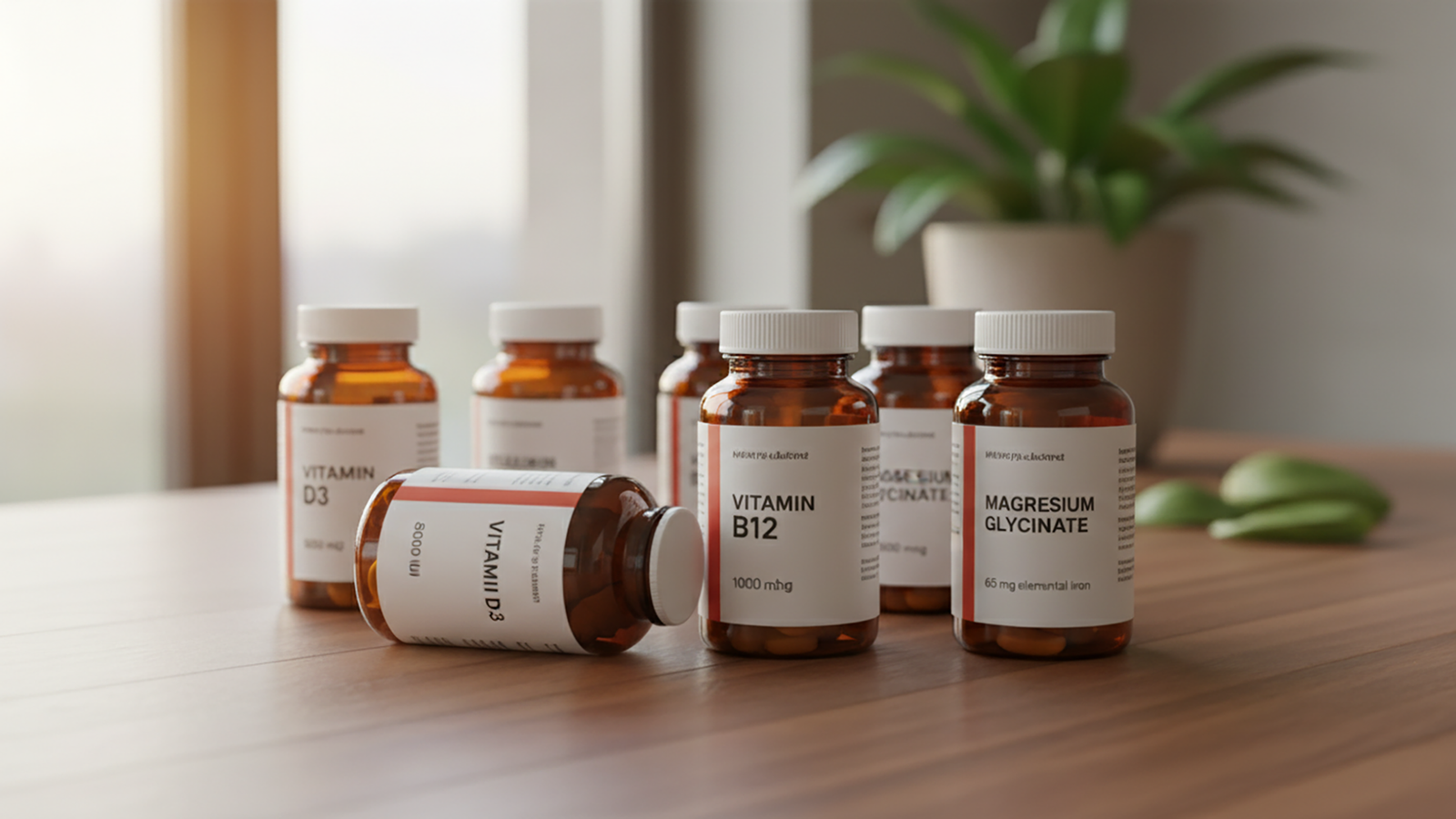
Deciding whether to take supplements depends on your diet, lifestyle, and individual health needs. Supplements can be helpful in certain situations, but they aren’t always necessary.
When You Might Benefit from Supplements
Diagnosed Deficiency*
If tests show low levels of certain nutrients (Vitamin D, B12, iron, magnesium), supplements can correct deficiencies safely.
* Blood tests from a doctor can confirm this
Restrictive Diets
- Vegan or vegetarian: May need B12, iron, omega-3s
- Keto: Might need electrolytes such as magnesium and potassium
- Low-calorie diets: May lack essential vitamins and minerals
Life Stage or Condition
- Pregnancy or trying to conceive: Folic acid, iron, DHA
- Over 50: Vitamin D, B12, calcium
- Athletes: Protein, creatine, certain vitamins/minerals
Professional Advice
Supplements should always be guided by your doctor or a registered dietitian. Avoid self-diagnosing and taking high doses without guidance.
When You Likely Don’t Need Supplements
- You eat a well-balanced diet rich in whole foods
- You feel well and have good energy
- You’re just trying to “optimize” health without clear goals or data
Supplements to Be Cautious About
- Mega-doses, especially fat-soluble vitamins (A, D, E, K) which can accumulate in your system
- Unregulated or low-quality brands — not all supplements are safe or effective
- Quick-fix promises — supplements aren’t magic solutions
Bottom Line
Supplements can be useful in specific situations, but most people don’t need them if they maintain a healthy, balanced diet. Always check with a healthcare professional before starting new supplements.
For trusted information, see the NHS guidance on supplements.